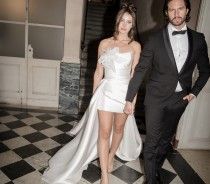

There is a moment, usually somewhere between the second glass of champagne and the first round of photographs, when every wedding reveals its true hierarchy. Not the seating plan. Not the family politics. The clothes.
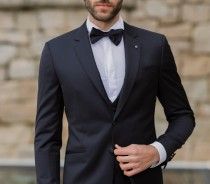
There is the groom who has dressed according to instructions: navy suit, white shirt, black shoes, regulation pocket square, everything matching everything else with the precision of a hotel lobby. Then there is the other one, who has done something slightly different.
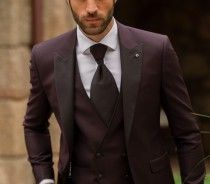
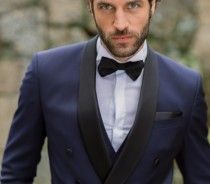
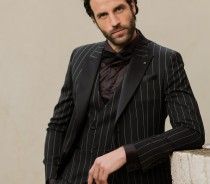
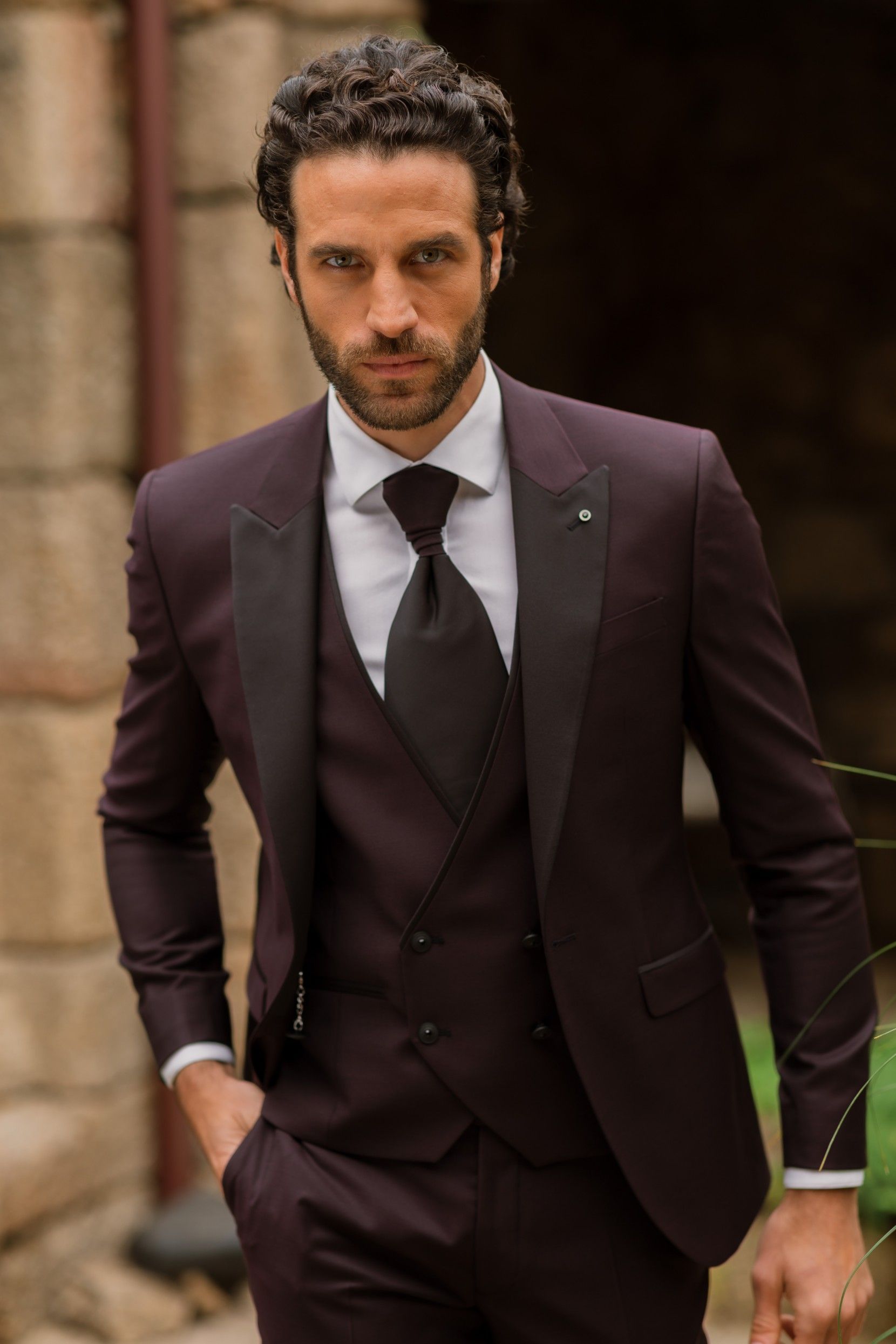
Perhaps the suit is chocolate brown. Perhaps the evening tailoring is cobalt blue. Perhaps there is a black shirt where convention had prescribed white. Perhaps the details don't match in the literal sense, and yet — somehow — the whole thing works.
People notice, not because he is shouting, but for the opposite. This is the curious power of the unexpected groom: he understands that individuality in formalwear isn’t achieved by adding spectacle. It comes from making one decision differently, and having the conviction to stand by it.
For decades, men's wedding fashion has been governed by a peculiar set of commandments. Navy is safe. Black is formal. Everything must match. The groom must look traditional. Personality, apparently, can wait until the honeymoon. But the modern wedding has become a more interesting stage.
A groom might marry in a palazzo, on a Tuscan hillside, beside the Mediterranean or in the middle of a city. He might exchange vows at noon and dance until two in the morning. Why, then, should his suit look as though it belongs to a once-upon-a-time prescribed story?
This is where Italian tailoring becomes particularly compelling, since its greatest strength has never been extravagance. It is the ability to take something familiar and make it feel intensely personal.


Consider the monochrome suit in an unexpected colour. Cobalt blue, for instance. At first glance, it appears to be a departure. Look closer, and the construction remains disciplined: the proportions are considered, the silhouette is recognisable, the details have a purpose. The surprise comes from the colour, not from chaos.
That distinction matters. The best Italian wedding suits still understand proportion, occasion and context. They simply refuse to confuse tradition with obligation. The same principle applies to the smallest details. A distinctive lapel. A particular fabric. A family watch. Velvet slippers after dark. A boutonnière chosen because it means something rather than because it happens to photograph well.
These are not declarations. They are signatures. And perhaps that is the real evolution of the groom's suit. The objective is no longer to look like the ideal groom, but to look like yourself, exceptionally well dressed.
At Thomas Pina, we believe the most memorable wedding style begins here: with a man who knows the rules, understands why they exist, and is confident enough to decide which ones belong to him. The unexpected groom is the man people remember.